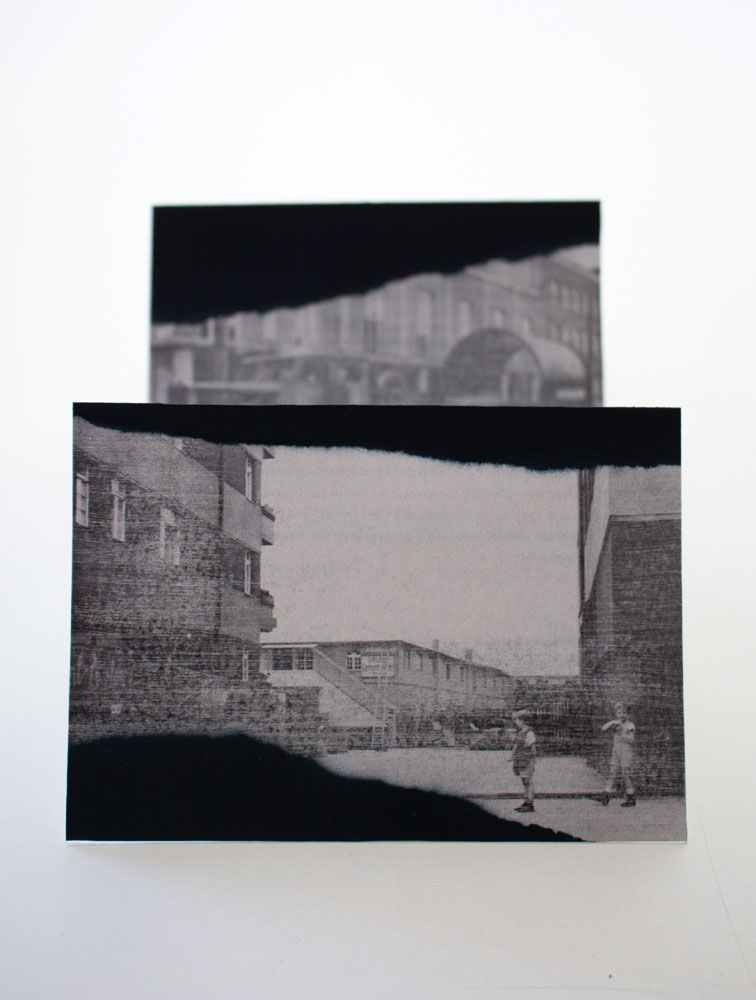
In May of this year, I spent a month at the Lichtenberg Studios. Originally, I wanted to explore the relationship between the flora present in the district and the urban space through the medium of photography. However, when I discovered the Lichtenberg Museum, which is located directly below the residential studio, I eventually began to work with the museum’s archive photographs. This tells the history of the district and shows, among other things, a documentation of the industrial development of Lichtenberg with numerous photographs of factories, company headquarters and working-class neighborhoods. In some of these photographs, life seems to have receded – the streets and industrial sites are deserted, except for the presence of the plant life that continues to coexist with the architecture.
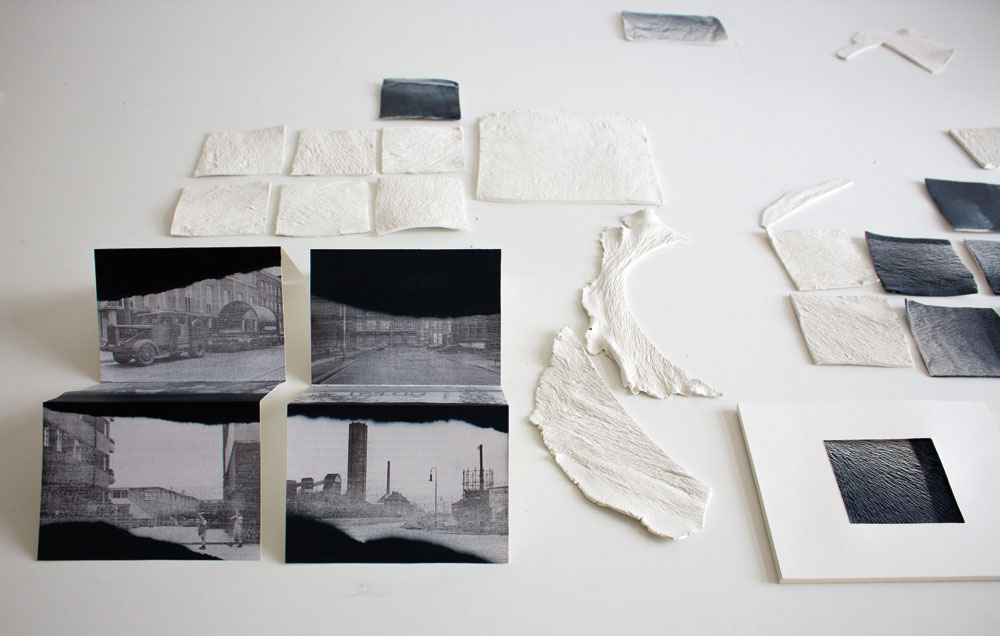
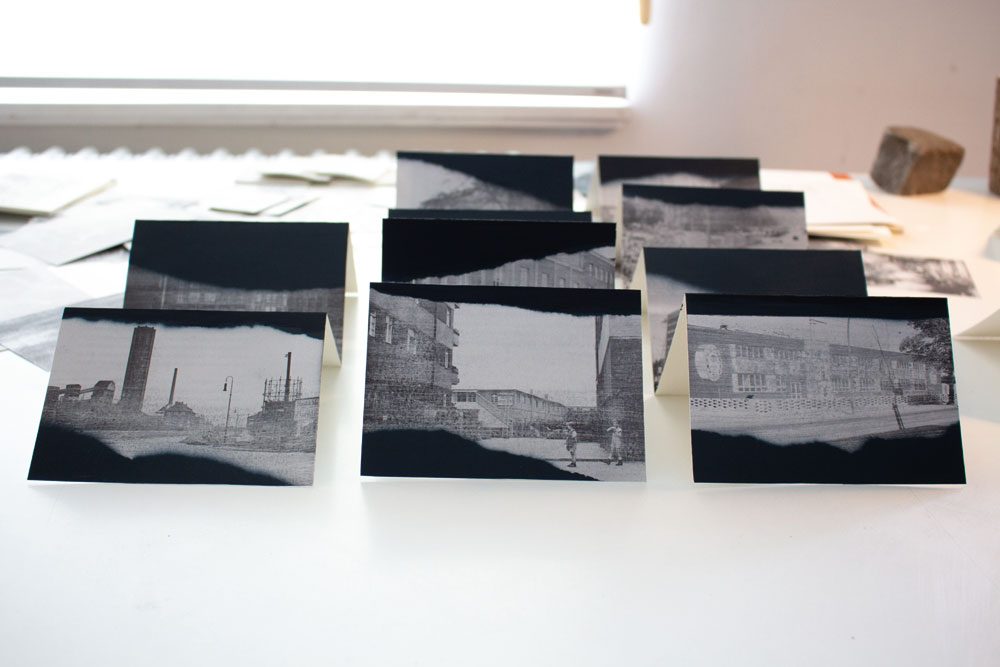
I found reproductions of these photographs and began a collage and montage work in the form of a long, folded leporello. I edited these images by cutting them down and then covering up certain parts. It seemed to me that these documents took on another dimension through these simple gestures of subtraction and concealment: An off of the images came to inhabit them. A kind of “hiding place” is dug into the image in question, where the photographer could have been standing when he took the shot, and conveys the feeling of a gaze and a body inhabiting the image and through which perception opens up.
The residency in Lichtenberg also enabled me to work with ceramics for the first time. As I explored the architecture of the neighborhood, I felt like working with clay and the impression process to enter into a dialogue with the materials and materials that surrounded me in a different way. I made impressions of certain materials: stones, bark, building materials that I had found on my walks. Then I began to juxtapose them and add more organic forms of folds, reliefs and creases, mixing organic, mineral, plant and building materials. This ensemble of a multitude of small ceramics, tactile traces of an environment is still in progress and will be shown in a first version as an installation at DIEresidenz in France.